
Why Make the Bed?
An Essay on Zazen

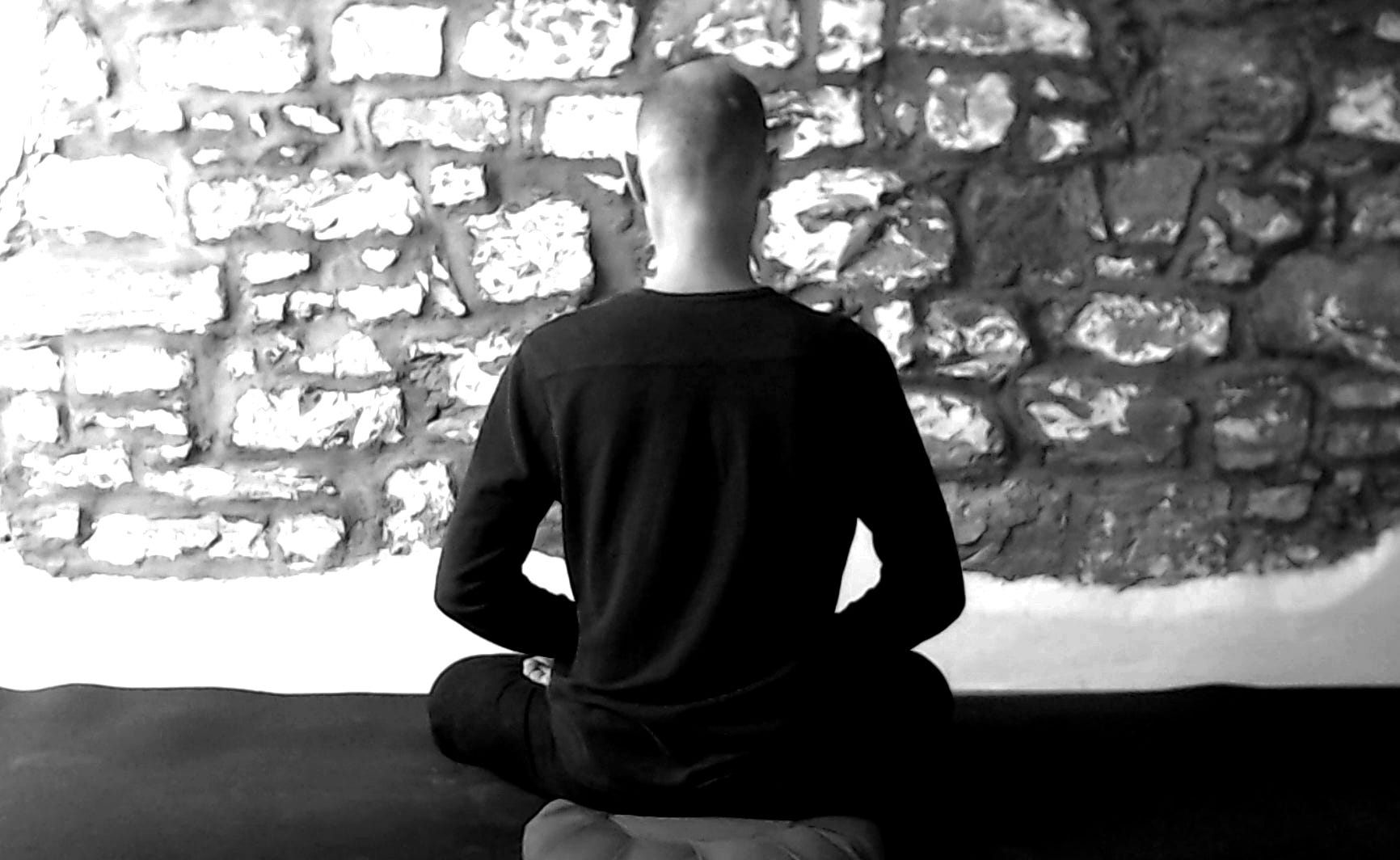
Why Make the Bed?
An Essay on Zazen
Eyes Horizontal, Nose Vertical
In 1227, the twenty-eight-year-old Zen monk Dōgen returned home to Japan from China, where he had been studying Zen practice. When his compatriots asked him what he had learned in China, he replied: “I learned that a person’s eyes are positioned horizontally, and the nose — vertically.”
In this seemingly banal answer, I discern at least four meanings:
1. Recognition of the obvious.
Truth is not located somewhere far away and is not hidden in exotic teachings; it is right here, in the most simple and obvious things. Eyes are positioned horizontally, nose — vertically. This is so simple and banal that it usually remains unnoticed.
2. Direct seeing.
This points to the immediate experience of reality without the overlay of concepts. Things are as they are, without philosophical superstructures and mystical interpretations.
3. The practice of zazen.
The form of our practice must satisfy two basic conditions: stable support on the ground and vertical positioning of the body. This is how the nose is vertical and the eyes are horizontal.
4. Naturalness.
The practice of shikantaza (”just sitting”) is a natural human state, as natural as the position of eyes and nose. Here nothing needs to be invented or added.
Why Set Out on a Journey of Seeking?
Some time after arriving in Japan, Dōgen wrote his first instruction on the practice of zazen titled “Fukanzazengi,” or “Universal Instructions for Zazen,” which begins with questions:
“The real way circulates everywhere; how could it require practice or enlightenment? The essential teaching is fully available; how could effort be necessary? Furthermore, the entire mirror is free of dust; why take steps to polish it? Nothing is separate from this very place; why journey away?”
These words can be heard as a statement. As if Dōgen is saying: no practice is needed. Everything is already here. You are already awakened. The Way has never left this place, so there is no need to seek. The mirror cannot become dusty, so there is no need to clean it.
I know that many people understand the statements of great awakened masters that everything we seek on the spiritual path is already right here, where we are, precisely this way: there is no need to go anywhere, no need to practice anything, no need to change, you are already good as you are, everything is already good as it is. However, I ask myself: is this really so?
Today at a meeting of the Cloud Sangha, one of our participants named Alexander asked: “Why make the bed every morning?”
Then he explained that this question had become a kind of koan for him, and he wanted to get an answer to it. Perhaps, Alexander continued, if he learns why he needs to make the bed every morning, he will also learn why he needs to meditate, why he needs to follow the spiritual path, and in general, why live.
And I completely agree with my companions on the Buddhist Dharma — Dōgen and Alexander:
“The real way circulates everywhere; how could it require practice or enlightenment? The essential teaching is fully available; how could effort be necessary? Furthermore, the entire mirror is free of dust; why take steps to polish it? Nothing is separate from this very place; why journey away? The bed is always ready for me to lie down in it and then get up from it, so why make it every morning and then unmake it again?”
In these questions of Dōgen and Alexander, I see not statements but precisely questions. I see not the closing of the topic but, on the contrary, its opening and curiosity toward it. I see not the negation of practice as such, but a deep looking into its meaning and the search for a form of practice appropriate to the life context.
Dōgen asks: what practice is needed? If the real way pervades everything, what efforts are appropriate? If the original mirror cannot become dusty, how to clean it? If the way never leaves this place, how to walk it?
I hear here not a question about whether practice is needed, but a question about what kind of practice should be when everything is already here.
Alexander asks: why make the bed in the morning and unmake it again in the evening, and I see here the search for the best way not only to adapt to impermanence, but also the best way to embody impermanence.
Can the Mirror Become Dusty?
The metaphor of the mirror is one of the central ones in Buddhism. Consciousness as a mirror reflecting reality. If the mirror has become dusty, if distortions have accumulated on it, then it reflects poorly. The logical conclusion from this: the mirror of consciousness needs to be cleaned, polished, freed from contamination.
This idea has been present in Buddhism since the time of the Buddha, and it gave rise to the famous dispute between two monks during the formation of Zen in China. The monks were named Shenxiu and Huineng.
Shenxiu, the senior monk who by all expectations of the monastic Sangha should have become the successor of the fifth Zen patriarch, wrote this verse:
The body is a bodhi tree,
the mind is like a standing mirror.
Always try to keep it clean,
don’t let it gather dust.
This is the approach of gradual purification. The body here is considered separate from consciousness; it is, first, made of a different substance, and second, performs the secondary role of a stand for the mirror. Of course, the body is important, but it only serves the main, reality-reflecting function of consciousness. Consciousness and reality in this paradigm are also two separate substances. Just as I, looking in a mirror, distinguish myself from it, so reality differs from consciousness. Consciousness is the subject of perception, reality consisting of phenomena is the object, or more precisely, an infinite number of separate objects. From such a dualistic approach, a quite logical conclusion is drawn: the mirror must be polished, cleaned, freed from dust, so that it reflects reality more accurately. Well, I wipe the mirror in the bathroom when I shave, to see my face more clearly.
However, Huineng, an uneducated monk working in the kitchen, responded with two verses. The first sounded like this:
Bodhi doesn’t have any trees,
this mirror doesn’t have a stand.
Our buddha nature is forever pure,
where do you get this dust?
The second like this:
The mind is the bodhi tree,
the body is the mirror’s stand.
The mirror itself is so clean,
dust has no place to land.
That is, Huineng speaks from a non-dual perspective: body, consciousness, mirror, and the world with its dust — this is all one. Everything here is made of one material, and, it would seem, Dōgen echoes him:
“The real way circulates everywhere; how could it require practice or enlightenment? The essential teaching is fully available; how could effort be necessary? Furthermore, the entire mirror is free of dust; why take steps to polish it? Nothing is separate from this very place; why journey away?”
However, listening to these words, I cannot help but notice: if everything is made of Buddha Nature, if the mirror cannot become dusty, if the Way never leaves this place — why then do I still get up every morning and do something? Why do I sit in zazen?
And here I hear again the question of Alexander from our Cloud Sangha:
“The bed is always ready for me to lie down in it and then get up from it, so why make it every morning and then unmake it again?”
Every Tile Reflects My Face
And indeed, if all reality is made of Buddha Nature and there is nothing besides it, why then practice leading to awakening? Can Buddha Nature become Buddha, or is this some kind of absurdity?
There is a classic Zen story about two Zen monks, Mazu and Nanyue, who were also occupied with this question:
In the Kaiyuan era (713–741), there lived a monk named Daoyi — the very one who would later be called Great Master Mazu. He lived at Chuanfa Temple on Mount Heng and every day practiced sitting meditation.
Master Nanyue Huairang saw that this person was a suitable vessel for the Dharma and came to him with a question:
— Reverend sir, what are you trying to accomplish by doing zazen?
— I’m trying to become a buddha, — Daoyi answered.
Nanyue then picked up a tile and quietly began to polish it on a rock in front of the hermitage.
— Master, what are you doing? — Daoyi asked.
— I’m polishing this tile to make a mirror.
— You can’t make a mirror by polishing a tile.
— If I can’t make a mirror by polishing a tile, how can you become a buddha by sitting in zazen?
— Well then, what should I do?
— It’s like a man driving a cart. If the cart doesn’t move, should you beat the cart or beat the ox?
Daoyi couldn’t find an answer.
The Master continued:
— Are you practicing to sit in zazen or practicing to sit like a Buddha? If you want to learn zazen, know that zazen is neither sitting nor lying down. If you want to sit like a Buddha, know that the Buddha has no fixed form. In the non-abiding Dharma, one should neither grasp nor reject. If you try to sit like a Buddha, you are killing the Buddha. If you attach to the form of sitting, you will never realize the principle.
Hearing these words, Daoyi felt as if he had drunk nectar.
— Records of the Transmission of the Lamp.
Dōgen referred to this story in several of his works. Here is how he comments on it in the essay “Zazenshin,” or “Acupuncture Needle of Zazen”:
Nanyue’s answer: “If grinding a tile cannot make a mirror, can sitting in zazen make a buddha?” — must be investigated with all thoroughness.
The words “polishing a tile does not become a mirror” do not mean that polishing has no relation to the mirror. On the contrary! They point to the fact that polishing the tile is the mirror itself.
In the same way, the words “sitting in zazen does not become buddha” mean that zazen itself is buddha.
Understand clearly: zazen does not wait for you to become buddha. Becoming buddha is not connected to zazen as goal to means.
When Daoyi said: “Then what is correct?” — this is usually read as a question. But this is not a question! This is a statement: “However it may be — this is precisely so.”
That is, everything that happens in this very moment is already a manifestation of buddhahood. This is like two friends meeting each other: I am your friend, you are my friend. “How?” and “precisely so” appear simultaneously, in a single moment.
In the Dharma where there is no permanent place of dwelling, buddha has no fixed form. Therefore, when you learn to sit as buddha — this very sitting already is the sitting buddha.
Who in this Dharma can grasp at buddha or reject him? Precisely because grasping and rejection have initially fallen away by themselves, the sitting buddha exists.
Zazen is not a technique, not a method, not a path to a goal. Zazen is the very manifestation of what already is and always has been.
Dōgen, as usual, creates with his text a koan, that is, something impossible to grasp as a logical and consistent story. Every story describes only a fragment of reality; reality itself is fundamentally indescribable because it includes all descriptions.
Making the Bed
Alexander asked: “Why make the bed every morning?”
And I hear here the same question that Nanyue asked: “Why sit in zazen?”
If the bed is already ready to receive me in the evening, why make it in the morning? If I will unmake it again in the evening, why make it in the morning? This is like polishing a tile to make a mirror. This seems meaningless. But is it really meaningless?
Dōgen says: polishing the tile is the mirror itself. Not that the tile becomes a mirror — polishing is the mirror.
In the same way: making the bed does not prepare me for life. Making the bed is life.
When I get up in the morning, fold the blanket, smooth the sheet, fluff the pillow, cover the bed with a bedspread, I am not preparing for something, I am living. Living right now.
Hands fold the blanket. Body bends. Breath moves. This is not a means for achieving order. This is order itself, manifesting in the movement of hands. This is not a method to become an organized person. This is organization itself, arising in the folding of the blanket.
And in the evening, when I unmake the bed, pull off the bedspread, fluff the pillow — I am again not preparing for sleep. I am living. Hands unmake the bed. Breath moves.
In the morning I make the bed, in the evening I unmake the bed — not because this is correct for something else, not because this leads somewhere, but simply because this is correct now.
Firewood is Firewood, Ash is Ash
When Dōgen returned from China, he was asked: “What did you learn?”
He answered: “Eyes are positioned horizontally, nose — vertically.”
This does not mean that he learned nothing. This means that he learned to see what is.
The practice of zazen is not a path to awakening; the practice of zazen is awakening itself, happening right now. Awakening to what is, as it is.
Making the bed is not a path to order, but order itself, arising in the movement of hands. Washing dishes is not a path to cleanliness, but cleanliness itself, manifesting in the sliding of the sponge over the plate. Writing this essay now is not a path to a written and read-by-someone essay, but meaning manifesting right now from under my fingers.
In his perhaps most famous essay “Genjōkōan,” Dōgen writes:
“Firewood becomes ash; it can never go back to being firewood. Nevertheless, we should not take the view that ash is its future and firewood is its past. We should recognize that firewood occupies its place in the Universe as firewood, and it has its past moment and its future moment. And although we can say that it has its past and its future, the past moment and the future moment are cut off. Ash exists in its place in the Universe as ash, and it has its past moment and its future moment.”
In Zen practice, we do not prepare to live. We live. In the place where we live.
Every morning I get up, fold the blanket, smooth the sheet, fluff the pillow, cover the bed with a bedspread. The made bed is in the place of the made bed.
Every evening I unmake the bed, pull off the bedspread, lie down. The unmade bed is in the place of the unmade bed.
Every morning and every evening I sit in zazen, fold my hands, straighten my spine, breathe, see, hear, feel, am aware. Not in order to become Buddha. Not in order to achieve something, but simply because this is true for me to be, this is true for me to live. To live in the place where I live now.
Eyes are positioned horizontally.
Nose — vertically.
The bed is made in the morning.
The bed is unmade in the evening.This is so.
The same text in Russian:
Зачем застилать кровать?
Collection of all essays:
Just Sitting?
You can join the Cloud Sangha’s shared practice here:
Cloud Garden of the Year
Since February 24, 2022, from the beginning of Russia’s war against Ukraine, I have taken a vow to work for voluntary donations (similar to a Buddhist monk). Since then, at least all of my online activity, which takes up 95% of my working time, has been happening in exactly this format. I intend to maintain this practice until the end of the war, and then we’ll see. If you value the “Buddha in the City” project and want it to live and continue its work, you can support it here in whatever way is convenient for you:
Support Buddha in the City
All the best to you, and see you on the cloud,
Valery Veryaskin