
Dharma of Wartime
An Essay on Zazen

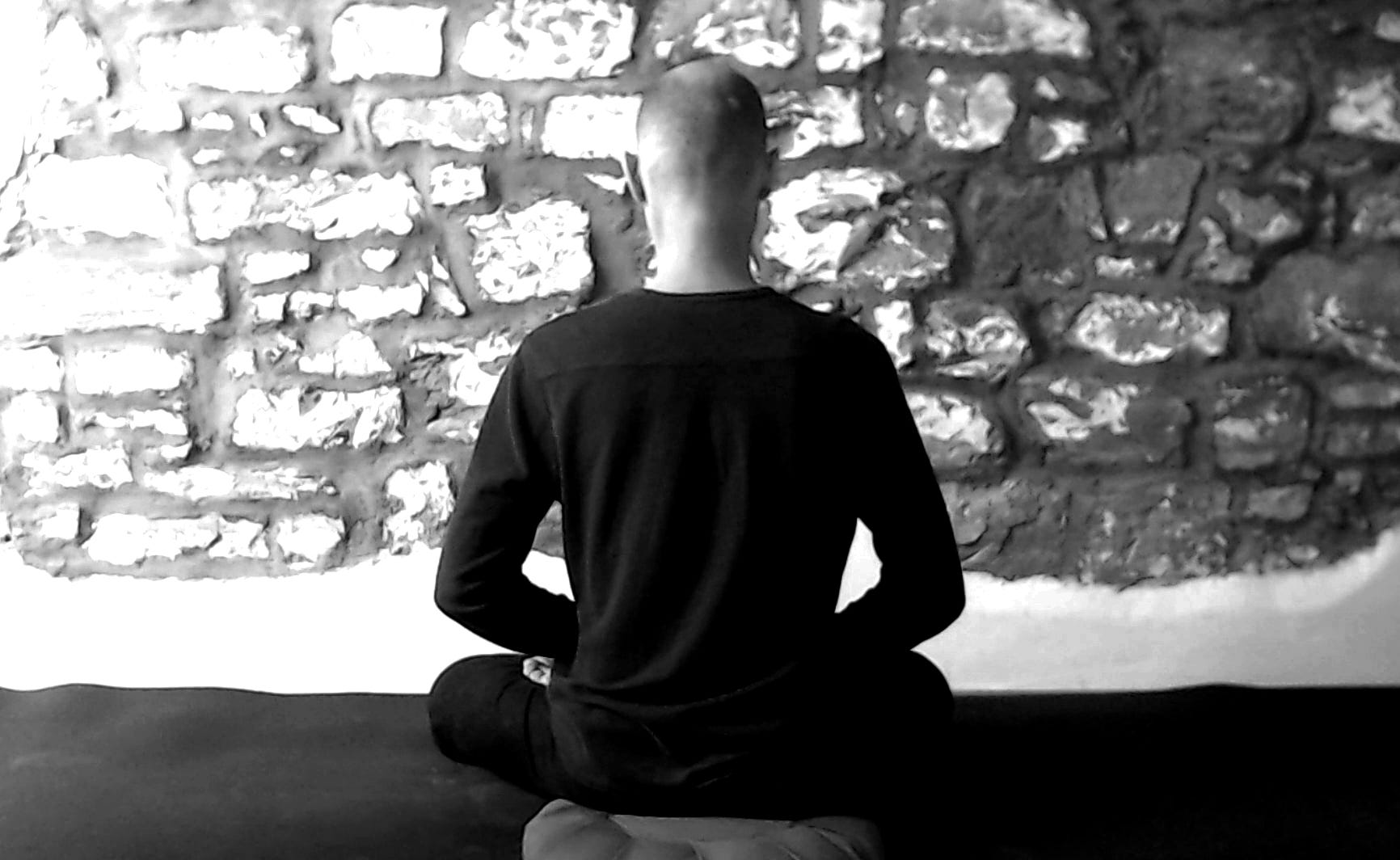
Dharma of Wartime
An Essay on Zazen
Why Sit When There’s War?
From the first day of the tragedy that befell us, I began holding daily meetings for those living through war and seeking peace. No, we didn’t start with zazen right away, because most people in a state of shock are unable to sit still with folded hands. Therefore, during the first six months of war, I primarily offered somatic practices, grounding practices, centering practices, and work with feelings. However, after six months of adapting to the new reality, we began sitting zazen every day, morning and evening. Because zazen is a somatic practice, a grounding practice, a centering practice, and work with feelings.
Today, as I write these lines, three years, nine months, and eight days have passed since the beginning of the war. Or 1377 days. This means that we in our Cloud Sangha — as we call our online Zen community — have been sitting together for exactly these 1377 days. Without breaks or days off. Even if for some reason I cannot go online, my cloud friends continue to sit. So why do we sit during wartime? Why do I sit during wartime? Why do I sit through war?
Sitting with This
Every morning, after waking but before meditation, I drink tea and check the news — both from mass media and from my friends in private messages. And every morning, after waking, I learn about the war. My friends live in Ukraine, in Russia, in occupied territories, in Israel (and after Hamas’s attack on Israel on October 7, 2023, the war there also became my war), my friends also live in many countries where they were forced to relocate because of war, and I am in contact with all of them. I learn news from them: about death, about destruction, about difficulties adapting in a new country, I learn about their fears, anxieties, troubles and sorrows... and I have absolutely no idea what to do with this.
How many such messages there have been during these 1377 days: “We have an air raid alert now, we’ve moved to the antechamber,” “A rocket destroyed half of the neighboring building,” “A drone hit my house, now I have no roof over my head,” “My nephew is missing,” “My brother was killed,” “Criminal charges have been filed against me,” “My daughter was imprisoned,” “We are forced to leave the country,” “I’m alone with two children in a foreign country, without knowing the language and any understanding of how to live here”... And outside my window is a peaceful sky, above my head — a roof, and the only siren I hear is the siren of an ambulance passing by my house. I sit with a cup of tea in my hands, and in my phone — death, destruction, and loss. What do I do with this contrast? Where do I put this knowledge?
There is a Zen expression that I often repeat both to myself and to participants in our Sangha: “The best thing you can do in any difficult situation is to sit with it.” But what does it mean to “sit with”? And how can you sit at all when your friends are under fire?
Nevertheless, the advice of the Zen way is exactly this: the best thing is to sit with what is. Sit with grief. Sit with fear. Sit with the impossibility of changing anything. Sit with news of a friend’s death. Sit with anxiety for those who are now under fire. Just sit —not solving, not fixing, not running away. This does not mean inaction. This does not mean indifference. This means that before acting out of panic, out of fear, out of despair or out of aversion, anger, rage — you can pause for a time. Sit down. And allow yourself to meet what is.
Where Is?
In me, in the Other, and between us.
I wrote the word “Other” with a capital letter because I mean everything that I do not experience as myself, everything that is other in relation to me.
Where Are You, Other?
I sit on my cushion and become aware: here I am, with my feelings, thoughts, desires, decisions — I, an independent sentient being, who decides for a time to make myself a self-sitting being. This is how I become aware of myself. I am aware of myself sitting inside my skin. Everything beyond this skin bag is other...
But continuing to sit, I begin to realize more and more deeply: here is the sound of an ambulance siren reaching me from the street—where is it? Isn’t it sounding in my hearing right now? Is it completely other in that case? Is it completely external to me? And the medical team rushing in that vehicle, and the person they’re hurrying to, and the other cars yielding to this ambulance and all the people sitting in them, and the pedestrians... this entire sequence of events unfolding now in life, is it completely separate, other and external in relation to this skin bag that I consider myself to be?
And my breath — is it limited by the skin bag? Do I really end just a millimeter from my nostrils? Or is the warmth of the exhale, moving in space from my nostrils, still me? And the coolness of external space, flowing into my nostrils, is it really something other and completely external to me?
And here is war and hundreds of my friends and acquaintances in trouble — even if they are thousands of kilometers from me now, are they separate, independent and completely other in relation to me? Am I other in relation to them? After all, I remember the warmth of their handshakes and embraces, I remember the timbre of their voices, I remember their homes where I have been, and the roads we walked together. So perhaps I am not a skin bag, hermetically sealed from everything “other” in relation to it? Perhaps I am perception itself? Perhaps I am life itself? And perhaps my main task in life is to discover who I really am?
Master Dogen, who founded the Zen lineage within which I walk my path, wrote about this in the essay “Genjokoan”:
“To study the Buddha Way is to study the self. To study the self is to forget the self. To forget the self is to be actualized by myriad things. When actualized by myriad things, your body and mind as well as the bodies and minds of others drop away. No trace of realization remains, and this no-trace continues endlessly.”
This is one of my favorite Dogen quotes, and I often turn to it, because it tells everything necessary to know about the path. As soon as I begin to look closely at the experience of my being, I can nowhere draw a clear boundary between myself and the Other. Is the air I breathe other? Is the cushion I lean on other? The deeper I look into myself, the more I lose myself as separate from everything, as a skin bag. “My” body and consciousness fall away, but at the same moment everything I perceive as radically other falls away — the body-mind of the external world falls away. And then I and the world recognize each other as ourselves. And if someone is left without a roof over their head, isn’t it the whole world, and therefore I, who is left without a roof? If someone has lost a brother, isn’t it the whole world, and therefore I, who has lost a brother?
February 24, 2022, 6 AM
Before the war, I held meditative online meetings twice a week. The next meeting happened to fall on February 24. Getting up, as usual, around five in the morning, having completed my hygiene routines, sitting down to drink tea, I opened social media and learned that war had begun.
The world stopped and for some time did not move. And I could not believe it. Outside my window was a dark winter morning. And this morning went numb.
I don’t remember how much longer I sat with cooling tea in my hand, with emptiness in my heart, with muteness on my lips. Then, at six in the morning, I went online on Zoom and met there with anxious people from different countries of the world. We, being in very different earthly places, in very different earthly circumstances, in very different earthly fates, met in cloud space, located above earthly borders, and united our such different circumstances and such different fates. The only thing we could do then was to fill our hearts with warmth. Warmth is released when meeting, and we began to meet.
1377
And so for 1377 days we continue to meet. Our cloud space is open and free, you can easily enter it and just as easily leave it, no one keeps anyone in it.
In Zen there is a term “unsui,” literally meaning “cloud-water” and coming from a line of an ancient Chinese poem: “Float like a cloud, flow like water.” Formally, unsui refers to either a novice monk who has just entered a monastery for training, or a monk traveling from monastery to monastery, not staying long in any of them, but I consider “unsui” the basic principle of life for anyone practicing Zen. Float like a cloud, flow like water, be an eternal student, an eternal wanderer, not clinging to accumulated knowledge — this is our practice. And in the space of the Cloud Sangha, each of us is Unsui, each can float in it like a cloud in the sky, coming and going. And therefore all who choose to come and sit together are those who feel some value in this—not to get something, but simply to be together. As clouds are together in the sky.
And if each of us comes to this space as a person of their unique fate, occupying a unique place in this life, if each comes as “I,” then in this space “I” and the world recognize each other as themselves. Which means everything that happens in this world happens in me. Which means the war continuing for 1377 days is my war, and it is I who needs to sit with it, to sit through it.
How much has already happened during this time! People came to our meetings and left, some returned after a long break, others did not return. Someone moved, and not once, from city to city or from country to country. Someone lost a home, someone found a new home. Someone parted with loved ones, someone, on the contrary, found new closeness. Someone fell ill, and someone recovered. Someone had children, and someone lost loved ones. But whatever happened, our Cloud Sangha continued to sit together.
Sitting Through War
And yet, what is it like to sit through war or any other trouble? Especially if this trouble doesn’t greatly concern me personally. After all, right now there is a roof over this, my, specific head. It wasn’t my house that was destroyed by a drone, but another’s.
For me, this is more a question of state than action. Because it is from state that this or that action is born. When a drone destroyed the house of a participant in our Sangha, we collected some money for him. Of course, it wasn’t enough to restore the house, but a meeting occurred. We did not shrink, did not each shut ourselves down in ourselves, in our private little life, but turned toward each other, opened up and let each other in. In this space “I” and the world recognize each other as themselves. And zazen — at the level of body, at the level of heart, at the level of mind and beyond all these levels — allows us to create such space.
After all, after zazen, each of us, getting up from the cushion, can do something for the world and for ourselves in the world: support those in need with money, actions, words, or, conversely, shared silence. After all, to be silent together can be no less important than to talk.
Once a student asked Zen master Yunnan: “What is the highest truth of the Dharma?” “In appropriate expression,” answered Yunnan. “But how to determine what is appropriate and what is not?” I continue to ask. “Zazen can teach us this,” the teacher answers me.
I Don’t Know How to Sit Where I Am Not
I write, of course, only about my own experience — the experience of a person whom war touches only tangentially, through friends and loved ones. After all, physically I am in a peaceful city, in a peaceful country. Therefore, from my own experience I cannot say what it is like to sit while hearing the howling of an air raid siren, rocket explosions, or the cannonade of guns. I cannot say what it is like to sit being forced to leave your home and country, or remaining in your home but living in internal emigration in your own country that has become foreign. However, participants of the Cloud Sangha sit precisely in such circumstances. If necessary, during an air raid alert they find a safer place, at minimum in a room under the protection of two walls, and continue to sit. Throughout the entire war, I have witnessed more than once how some of the participants moved to such a space during our session, I heard through headphones the cannonade of explosions when talking with some of them, and I know: if they continue to sit zazen even in such conditions, it means this helps them move forward through the war. Other participants, those who were forced to leave the country, sit in their new places, and according to them, practice helps them find support — direct support, felt by the butt and spine, support in their life as it is, where it is.
For the time being
Another essay by Dogen, titled “The Time-Being,” begins like this:
“ An old Buddha said:
For the time being, I stand astride the highest mountain peaks.
For the time being, I move on the deepest depths of the ocean floor.
For the time being, I’m three heads and eight arms.
For the time being, I’m eight feet or sixteen feet.
For the time being, I’m a staff or a whisk.
For the time being, I’m a pillar or a lantern.
For the time being, I’m Mr. Chang or Mr. Li.
For the time being, I’m the great earth and heavens above.
The “time being” means time, just as it is, is being, and being is all time”.
For the time being I write this essay, for the time being I sit together with the Cloud Sangha, for the time being I live through the time of war. for the time being — this is the living essence of time. Is there any other me besides this “for the time being “?
1377 days ago I was another “ for the time being,” prewar, and now—it is wartime, and that means I am wartime. Therefore, I cannot turn away from the time of war. Do I want to turn away from myself, from the time of my life? No. Therefore, the only thing left for me is to sit and look into myself, forgetting myself. Allowing the world to recognize itself in me.
True Strength
Shunryu Suzuki in the book Zen Mind, Beginner’s Mind says:
“When you feel disagreeable it is better for you to sit. There is no other way to accept your problem and work on it. Whether your posture is good or bad is out of the question. Everyone can practice zazen, and in this way work on his problems and accept them.
When you are sitting in the middle of your own problem, which is more real to you: your problem or you yourself? The awareness that you are here, right now, is the ultimate fact. This is the point you will realize by zazen practice. In continuous practice, under a succession of agreeable and disagreeable situations, you will realize the marrow of Zen and acquire its true strength.”
“Which is more real: your problem or yourself?” the teacher asks me.
“ For the time being — I am wartime,” I answer him.
Now — this is my reality. But for the time being — I am also the great earth and heavens above. How did I understand this? By sitting zazen for the time being. War is for the time being. I am for the time being. And the only way to live through wartime is not by turning away from it, but by becoming it. Sitting with it. 1377 days. And tomorrow — the 1378th.
The same text in Russian:
Дхарма военного времени
Collection of all essays:
Just Sitting?
You can join the Cloud Sangha’s shared practice here:
Cloud Garden of the Year
Since February 24, 2022, from the beginning of Russia’s war against Ukraine, I have taken a vow to work for voluntary donations (similar to a Buddhist monk). Since then, at least all of my online activity, which takes up 95% of my working time, has been happening in exactly this format. I intend to maintain this practice until the end of the war, and then we’ll see. If you value the “Buddha in the City” project and want it to live and continue its work, you can support it here in whatever way is convenient for you:
Support Buddha in the City
All the best to you, and see you on the cloud,
Valery Veryaskin