
How to Lighten the Heart?
An Essay on Zazen

How to Lighten the Heart?
An Essay on Zazen
What to Do When You Can’t Sleep?
This morning I woke up at 4:30 AM and spent the next half hour lying in bed thinking about life. About all its uncertainty and complexity. The life of the world and my own life in this world. I thought about my choices, about what would be right to do and what would be wrong, what would be good and what would be bad. At the same time, I noticed that all my attempts to understand and decide something were mostly concentrated in my head, while my feelings wandered homeless through my body, squeezing my heart, gripping my stomach, interrupting my breath, and making me toss from side to side.
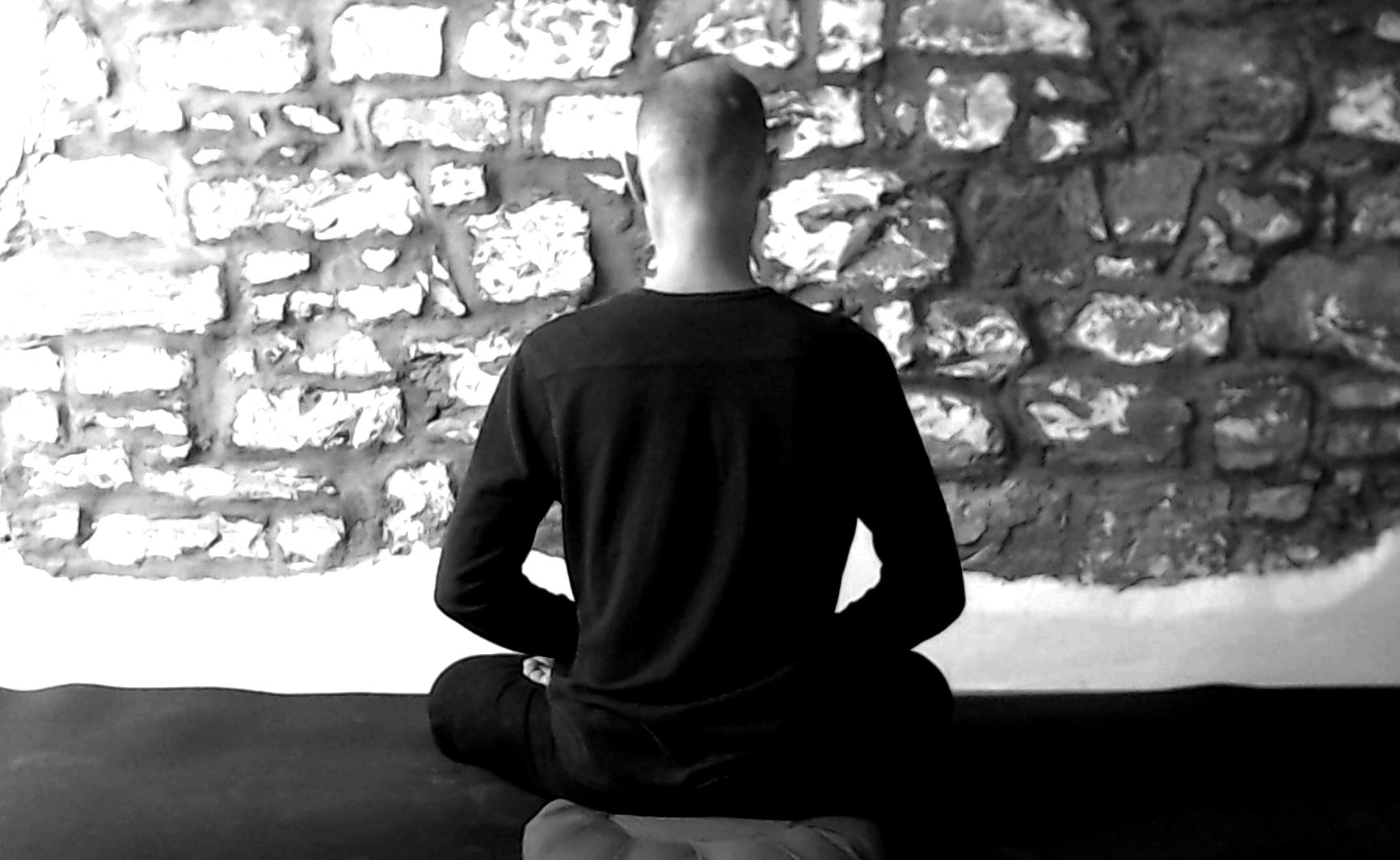
Then, getting up from bed, I moved to my meditation corner and sat in zazen. Having sat motionless for two hours in darkness until the morning meeting of the Cloud Sangha began, and then another 40 minutes together with the Sangha, I did not come to understand more about the world and myself, remaining with my not-knowing. However, now my not-knowing was no longer concentrated exclusively in my head, which was urgently trying to decide something, but shifted to my heart, opening it in all directions. Moreover, the not-knowing spread throughout my entire body and paradoxically calmed my feelings. I became whole and stable in my not-knowing, because it rested on the precise knowledge of my heart, belly, bones, and breath.
Having finished the Sangha meeting, I got up, left my meditation corner, and went to live my small life in the huge world, full of uncertainty and complexity. And although I did not have complete understanding of how to solve the problems of the world and my life in it, nevertheless, after zazen practice, I did not learn more, but felt more clearly the boundaries that the heart cannot cross, and gained the ability not to betray what is clear to the heart, not to the mind constructing “correct narratives.” I had landmarks for my way forward, and I could firmly rely on my path.
The Weather Vane Person
Recently I learned that an acquaintance of mine claimed to have “seen the light” regarding Russia’s war against Ukraine. If previously he, being a citizen of Russia, categorically condemned his state’s invasion of another’s territory, now, having watched a number of podcasts about geopolitics and listened to opinions in which the attack was justified by the logic of “great powers” struggle for spheres of influence, he himself did not exactly adopt the position of an ardent supporter of the war, but became sort of not against it either: well, after all, we are defending our interests, how can we not fight for them? I’m speaking here not about a specific political position, but about the mechanism that again and again justifies the worst behavior with “great explanations”, turning violence into an allegedly inevitable norm.
Honestly, I feel sorry for this person. Remembering his life, I see how many times he changed his position on various issues, relying only on his emotions and changes in the description of some situation. Such people are called weather vanes — wherever the wind blows, they turn their nose. But what kind of wind is this, I ask myself? And I answer myself: this is the wind of narrative.
My acquaintance is neither stupid nor heartless. He is educated, well-read, capable of complex reasoning, but, it seems, trusts stories told about reality too much, rather than direct experience of reality. And the story changes, it always changes over time.
Here I am, for example, born and raised in the USSR, a country with a very powerful propaganda system. The system enmeshed a person in its stories from head to toe and carefully blocked access to any alternative information. Breaking out of this doctrine was extremely difficult. However, this system collapsed in a short time, and with it the state that had seemed powerful and formidable before also collapsed. That is, the story with which this “great power” enchanted and mesmerized its citizens, and on which its might was based, turned out to be not only impermanent, but also quite fragile, not very great, and moreover, evoking contempt and mockery from people who managed to look at it from the outside and compare it with other stories.
As soon as the communist narrative was replaced by the capitalist one, weather vane people turned their noses to the West and became enchanted by new stories about a consumerist paradise. But years passed, and the dominant narrative of that country, which considered itself the heir of the USSR, also began to drift in some new direction, strangely mixing the stories of the Russian Empire and the Soviet Union — truly a chimera, with a lion’s head, a goat’s body, and a snake’s tail — oh, and two bird heads, of course — each looking in its own direction. However, despite the strangeness of such a story, weather vane people turned around again and began singing in chorus the USSR anthem with text edited for the new story.
As I said, I feel sorry for these people, because they are weak and fragile. They can, of course, be very dangerous to others, because they make excellent fanatics, ready to kill and destroy everyone who disagrees with their ‘truth.’ But this very fanaticism, this aversion to any different view, testifies to their weakness. Internal, ethical weakness. Fanaticism always testifies to a person’s insecurity and deep fear before the raw existential givenness of life.
Nor does it matter that the fanatic’s view can radically change, because it is precisely this change that fanatics call ‘seeing the light.’ But what have they ‘seen’?—I ask again. Reality itself or just another story about reality? Why do these people first fanatically follow one view, and then just as fanatically another, sometimes opposite to the previous one?
Maybe what’s important to them first and foremost is the fanatical faith itself, and only then the object of faith? Perhaps fanaticism is not fidelity to truth, but dependence on certainty? It’s not the person who changes, but the story that allows them not to meet with uncertainty? Don’t they hide from the indescribable reality by faith in a certain description of the world, seeking at least briefly to feel safe?
Marx called religion the opium of the people, meaning that opium is a means of relieving the pain of existence. And I think that by religion we can understand precisely description, narrative, giving a person ready “correct” answers about reality and calming their doubts. In this sense, any ideology is the same religious narrative. Marxism, for example, enchanted and mesmerized the inhabitants of the country where I was born for many decades.
The Blind Men and Their Elephant
In the collection of suttas of the Pali Canon “Udana” there is a parable about a king, blind men, and an elephant, with which the Buddha shows his students what it makes no sense to rely on when following the path, which in Buddhist language is called Dhamma (Pali; Sanskrit—Dharma). But if we consider that life itself is the human path, then Dhamma is simply a certain style of life.
So, one day a certain king, deciding to amuse himself cruelly, gathered several people blind from birth who in their lives had never encountered an elephant, and consequently did not know what an elephant is. Having gathered them, he ordered them to approach the elephant from different sides, feel it, and then tell what, actually, they learned about the elephant.
Here’s Thanissaro Bhikkhu’s translation of this parable from the Udana:
The Buddha told how the blind people were shown different parts of the elephant, and the king then asked each of them: “What sort of thing is an elephant?”
“The blind people who had been shown the elephant’s head said, ‘The elephant, your majesty, is just like a jar.’
“Those who had been shown the elephant’s ear said, ‘The elephant, your majesty, is just like a winnowing basket.’
“Those who had been shown the elephant’s tusk said, ‘The elephant, your majesty, is just like a plowshare.’
“Those who had been shown the elephant’s trunk said, ‘The elephant, your majesty, is just like the pole of a plow.’
“Those who had been shown the elephant’s body said, ‘The elephant, your majesty, is just like a granary.’
“Those who had been shown the elephant’s foot said, ‘The elephant, your majesty, is just like a post.’
“Those who had been shown the elephant’s hindquarters said, ‘The elephant, your majesty, is just like a mortar.’
“Those who had been shown the elephant’s tail said, ‘The elephant, your majesty, is just like a pestle.’
“Those who had been shown the tuft at the end of the elephant’s tail said, ‘The elephant, your majesty, is just like a broom.’
“Saying, ‘The elephant is like this, it’s not like that. The elephant’s not like that, it’s like this,’ they struck one another with their fists. That gratified the king.
“In the same way, monks, the wanderers of other sects are blind and eyeless. They don’t know what is beneficial and what is harmful. They don’t know what is the Dhamma and what is non-Dhamma. Not knowing what is beneficial and what is harmful, not knowing what is Dhamma and what is non-Dhamma, they keep on arguing, quarreling, and disputing, wounding one another with weapons of the mouth, saying, ‘The Dhamma is like this, it’s not like that. The Dhamma’s not like that, it’s like this.’”
Thus the Buddha criticizes followers of other, non-Buddhist teachings. However, in my opinion, through this parable he shows the general tendency of human consciousness that relies only on the “correct” story about reality, but not on reality itself.
After all, what do the blind men do in this parable? I can break down their process of knowing reality into several stages:
1. Each of them feels their part of the elephant. And at this stage of “raw,” immediate sensory experience they really meet with reality. Even if only with a small fragment of it, this is nevertheless a living and immediate meeting.
2. They compare their immediate experience with previous experience stored in their memory. They search for what familiar experience they can rely on to fit the current experience into some picture understandable to them.
3. They find similar experience: the elephant’s leg resembles a post already familiar to the blind man; the ear resembles a fan, the head—a jar.
4. At the fourth stage an error occurs. The blind man, even understanding that now he feels not a post, but something else, merely similar to a post, is so afraid to let go of this familiar image of the post and agree that now he is meeting with an absolutely unfamiliar object, that he identifies and almost equates the elephant’s leg with the post. But this is only half the trouble. The real trouble happens at the next stage.
5. The fatal error occurs precisely here. The blind man declares not “my section of the elephant resembles a post,” but “the elephant resembles a post.” The whole elephant, understand?! This is what we call generalization or categorization, but the main nerve of the error is deeper: he turns comparison into identity. He takes the model for the thing. What should have remained a cautious hypothesis: “resembles...” becomes an ontological verdict: “this is...”
Why is this an error? Well, because both the king, and you and I, and even the elephant itself, perceiving the elephant as a whole, know that the elephant doesn’t resemble either a post, or a fan, or a jar. The elephant is an elephant, it’s an absolutely unique reality, whose parts in a certain context we can compare with something else, but not identify them with the compared object.
However, the blind man is not in the same position as we or the king who perceives the whole elephant. He only thinks that he has studied the elephant thoroughly and can accurately answer the question of what an elephant is. And his conceit ruins him.
“Saying, ‘The elephant is like this, it’s not like that. The elephant’s not like that, it’s like this,’ they struck one another with their fists... They don’t know what is beneficial and what is harmful; they don’t know what is the Dhamma and what is non-Dhamma. Not knowing what is beneficial and what is harmful; not knowing what is Dhamma and what is non-Dhamma, they keep on arguing, quarreling, and disputing, wounding one another with weapons of the mouth, saying, ‘The Dhamma is like this, it’s not like that. The Dhamma’s not like that, it’s like this.’”
Pride, conceit, and seeming omniscience — this, in my opinion, is humanity’s main problem. Our blindness to the reality-generalizing stories we tell about reality.
What Is Good and What Is Bad?
The Buddha says that the blind men “don’t know what is beneficial and what is harmful; they don’t know what is the Dhamma and what is non-Dhamma.” But do I know? Does my acquaintance who turned his nose to the wind of history know? Does any of us living in this time of war, changing narratives, collapse of former worldviews, know what is good and what is bad?
Yes, actually, we know what is good and what is bad. Every human being knows this, every living being knows this. Knows with the heart, belly, bones, skin, and breath. Knows with their being, independent of any stories told about this being.
We know this, people living now, people who lived centuries and millennia ago knew this. Even the ancient Egyptians knew this. And they recorded this knowledge not as a philosophical doctrine, but as an image.
The Weight of the Heart That Cannot Be Deceived
I remember how as a teenager I first read fragments of the so-called “Egyptian Book of the Dead”, and it struck me. I insert this image here not for exoticism and not for the sake of comparing religions, but because it is an ancient way of saying the same thing that zazen shows without words: the heart inevitably becomes the measure of good and evil. In the silence of sitting, when the mind temporarily releases its “correct” explanations, what emerges needs no narrative — the weight of the heart, which cannot be deceived.
This book tells of the posthumous judgment of a person for their deeds during life. Reading it, I imagined how after my death I enter a hall where the walls shine with the light of truth, and the air is mobile, carrying every word with an echo going into eternity.
Ahead I see the scales of Maat, measuring the weight of truth and justice. On one pan lies my heart, warm, trembling, and filled with the deeds I committed during my lived life. On the other — an almost weightless ostrich feather.
Dog-headed Anubis takes me by the hand and leads me, like a father leading a child to an important exam. He bends over the scales, his gaze stern and calm. Anubis is the guardian of the scales of justice.
Nearby stands the god Thoth, holding a reed pen and scroll. He looks intently with his bird eyes and keeps a record of each of my deeds in life, because in this place nothing is forgotten and nothing can be hidden.
The chief judge and examiner here is Osiris — the guardian of the threshold and lord of the underworld. He is called the Lord of the Two Truths, because he guards and affirms two levels of Maat: the truth of the universal law of order and justice lying at the foundation of the universe; and the personal moral truth of the person, that is, the correspondence of their deeds to this law. In other words, in the unified law of Maat, the truth of being and the truth of responsibility.
Looking into the eyes of Osiris, seated on the throne of the king of the underworld, I speak. According to Spell 125 of the Egyptian Book of the Dead, the deceased says:
“Hail to you, great god, Lord of the Two Truths!
I have come to you, my lord, brought to behold your beauty.
I know your name, I know the names of the forty-two gods who are with you in this Hall of Two Truths,
those who feed on evil and devour blood on the day of judgment of souls.
I have come to you, lords of justice,
I have brought you truth, I have destroyed falsehood for you.
I have not done evil to people.
I have not oppressed my neighbors.
I have not committed sins in the place of truth.
I have not known evil,
I have not ordered anyone to labor excessively.
I have not instilled fear.
I have not committed abominations before the gods.
I have not slandered a servant to his master.
I have not caused hunger.
I have not caused weeping.
I have not killed.
I have not ordered killing.
I have not tampered with grain measures.
I have not stolen.
I have not taken bread from children.
I have not taken milk from the mouths of infants.
I have not committed abominations against the sanctuaries of the gods.
I am pure. I am pure. I am pure.”
The Buddha in the “Udana” text says: “They don’t know what is beneficial and what is harmful; they don’t know what is the Dhamma and what is non-Dhamma.”
The deceased person, appearing before the Divine Council, as if in a mirror, learns in Osiris’s eyes what is good and what is bad. Looking into the mirror of these all-knowing eyes, the person recognizes what is Dhamma and what is not.
“I have not done evil to people. I have not oppressed my neighbors. I have not ordered anyone to labor excessively. I have not instilled fear. I have not caused hunger. I have not caused weeping. I have not killed. I have not ordered killing. I have not stolen. I have not taken bread from children. I have not taken milk from the mouths of infants” — all this is good!
Is this so difficult to understand? And is what was good for the Egyptians four thousand years ago now bad for us? Or perhaps there is some unclarity here, or ambiguity? Perhaps for geopolitical advantage I can neglect this knowledge and begin to kill, or give orders to kill, oppress, instill fear, steal? Perhaps if it’s advantageous to me, I can justify these deeds and say that not everything is so unambiguous? Perhaps since my tribesmen steal, kill, and devastate, I too can join them for company? Perhaps since many people in the world steal, kill, and devastate, I too can join them? Perhaps I’ll even explain to myself that the world is arranged this way, that everyone does this here, which means this is good, this is right?
Alone with Oneself
What is represented for me in this myth, recorded four thousand years ago — is it only that I will stand before judgment after death? No, not only. I grasp the message of this myth every time I remain alone with myself, alone with my heart. In these moments I meet with the Lord of the Two Truths, the Osiris of my conscience. And if my conscience is not confused and not obscured by a thousand stories justifying the necessity of murder, violence, oppression of others, deception, theft, and lies, then the truth about good and bad becomes, in general, quite obvious. The truth of being and the truth of responsibility meet in my heart, as soon as I release the stories about right and wrong.
This Is the Teaching of All Buddhas
Dogen’s essay “Shoaku Makusa” (Refrain from Evil) begins with a short formula:
The primordial Buddha said:
Refrain from all evil whatsoever;
Uphold and practice all that is good;
Purify your own mind.
This is what all Buddhas teach.
What is evil and what is good — this, as I have already said, should ideally be understandable to any person, whether ancient Egyptian priest, medieval samurai, or modern programmer. In my opinion, that it’s better not to rob, not to devastate, not to kill, and not to lie should be understandable to anyone who would not want to be robbed, devastated, and killed, who would want justice and trust to reign in the world in which they live. That is, a person desiring justice and trust in the structure of the world should ideally take responsibility for their part of the work in this world, and embody justice and trust with their life. After all, it’s not about retribution that sooner or later overtakes the evildoer, or their descendants as their continuation, but also about the heart. The heart is weighed down by deeds that violate justice and trust in this vast world.
However, if such understanding of the worst and the best should ideally be inherent in all people who are going to die sooner or later and stand before Osiris’s judgment, why then do they nevertheless so often not follow the best and increasingly burden their heart?
In my opinion, the Buddha answered this question with the parable of the elephant, pointing to how we, humans, are blinded by our own self-image and the stories we tell about ourselves. If I experience myself as a separate, isolated being, alienated from the whole, then I will be moved mainly by the thirst for survival of this small identity of mine. It is precisely from this alienated and lonely identity that fear, greed, and aversion will be born, and it is precisely this identity of a small being alienated from the whole that will grasp at stories justifying fear, greed, and aversion. It is precisely this small, alienated identity that will strive to unite with others, similar alienated identities like it, to feel protected in its similarity and experience of unity.
But by what means will these lonely identities acquire a sense of unity?
By means of the “only correct” story. This identity will find its own in the description of nation, ideology, religious “truth,” this identity will already speak not of “myself,” but of “us” and of our “only true” truth. It is precisely with this highest and only correct “truth” that the small and lonely identity, still fearing reality, will justify fear, greed, and aversion. Will justify hatred toward any other story, toward another description of reality, and toward the very existence of the carrier of another description.
“Not knowing what is Dhamma and what is non-Dhamma, they keep on arguing, quarreling, and disputing, wounding one another with weapons of the mouth, saying, ‘The Dhamma is like this, it’s not like that. The Dhamma’s not like that, it’s like this.’”
Instead of recognizing the limitations of one’s personal understanding, turning to each other, hearing descriptions of the elephant in different sections and putting this description into one common picture useful to everyone, these blind men try to protect their exclusive and “only true truth.” “Exclusive truth” — this is the one that excludes others, isn’t it?
Thus, the truth we people should orient toward consists in being more modest in generalizations, listening to each other and putting our partial descriptions into one common picture. And in general remembering that truth is indescribable, and any description is only an angle of vision. But even more we should orient toward the truth of being itself, which is not described but experienced.
However, we, unfortunately, are mostly blind, deaf, and insensitive, and it seems to us that the whole elephant, all its being, can fit into our partial description, and all who do not agree with this description not only have no right to their own view, but sometimes have no right even to exist. This is precisely that worst of which the Buddha spoke: to live arguing, quarreling, disputing, wounding one another with weapons of the mouth, saying, “The Dhamma is like this, it’s not like that. The Dhamma’s not like that, it’s like this”, and then, when words are no longer sufficient for the victory of one’s “truth,” to begin wounding one another with fists and real weapons.
Purify Your Mind
But what is the way out of this labyrinth of stories generated by fear and justifying violence?
For me personally, the key to the gates leading out of the labyrinth is contained in the last of the three calls of the Buddha: “Purify your own mind”.
The primordial Buddha said:
Refrain from all evil whatsoever;
Uphold and practice all that is good;
Purify your own mind.
This is what all Buddhas teach.
Dogen wrote this formula in Chinese, where the last phrase is written with characters: 自淨其意 (zi-jing-qi-yi), each of which can be translated as:
自 — zi — self, independently
淨 — jing — to purify, to free, to clarify
其 — qi — one’s own, personal, its
意 — yi — intention, thought, consciousness, mind.
Thus, this phrase can be translated as “purify your own mind”, or “clarify your own intention”, and this, as I said above, is for me personally a practical key for discovering the deep and whole truth that I should orient toward. And this key is embodied in the practice of zazen.
Zazen offers me what at first glance seems a paradox: before knowing something, one needs to return to not-knowing. However, not to not-knowing only with the head, but to not-knowing with all of oneself.
When I sit in zazen, I do not try to understand what is good and what is bad through description. I do not seek the correct narrative in which I could believe, in which I could calm down, because it would explain everything, arrange everything on shelves and tie up all the loose ends. No, I just sit.
And in this sitting something amazing happens: I cease to be a blind man who holds onto his section of the elephant and shouts to others: “The elephant is a post!”
No, I become one who simply meets with the elephant. Not trying to define it. Not trying to understand it. Simply being present with what is, being present in the current experience of being, whatever it may be.
And Then?
And then in the space freed, even if briefly, from stories shouting over each other, I have a chance to lower the center of my current experience from my head to my heart. And I have a chance to feel the heart. To feel its weight, and possibly to understand what could be done right now for its lightening.
The weather vane person has it hard. He carries one narrative in his heart, then another, then yet another. Each time his heart is weighed down by new justifications of the worst, which he takes for ‘seeing the light.’ But seeing the light is not the replacement of one story with another. Seeing the light is when you feel the weight of your heart and can no longer lie to yourself. Murder, oppression, destruction of homes, robbery, and lies cannot be justified by geopolitical advantage, or indeed any advantage — ‘mine’ or ‘ours.’ Because sooner or later the Lord of the Two Truths will look into the eyes of any person and the time will come to weigh the heart.
The Freedom Not to Be a Jerk
In the same essay “Shoaku Makusa” (Refrain from Evil), Dogen writes:
“Even if evil deeds fill worlds upon worlds and consume all things, refraining from them is liberation.”
Writer and Zen teacher Brad Warner paraphrased this statement of Dogen in his own words:
“Even if the whole universe is nothing but a bunch of jerks doing all kinds of jerk-type things, there is still liberation in simply not being a jerk.”
Yes, such freedom exists, and we know examples in human history when people refused to do jerk things, even if all circumstances compelled them to this, not only for some advantage, but even for the sake of saving life. Because the heart and its weight are more important than life.
What Does My Heart Say?
When I get up from the cushion, I still don’t know the answers to all questions. The head can still offer me different stories, different descriptions of the elephant. But now I have another criterion. I can ask: what does my heart say? Not the heart entangled in stories, but the heart that right now lies on the scales of Maat. The heart that knows. Knows without words, without explanations, what is good and what is bad. The heart that wants to become lighter. It is precisely lightness that is good for the heart. And therefore we sit, to ask again and again not “who is right,” but “what will lighten the heart?” — and not to betray this answer. This is precisely why Dogen in his essay “Fukanzazengi” writes: “The zazen I speak of is not learning meditation. It is simply the dharma gate of enjoyment and ease.”
Every morning and every evening, for more than a thousand days I sit together with the Cloud Sangha. We learn not to argue about narratives and not to strike one another with fists, like the blind men from the parable. This doesn’t always work out, but we try again and again to sit quietly together. And in this sitting each of us has a chance to feel our heart. How heavy it is. And what can be done for its lightening.
The same text in Russian:
Как облегчить сердце?
Collection of all essays:
Just Sitting?
You can join the Cloud Sangha’s shared practice here:
Cloud Garden of the Year
Since February 24, 2022, from the beginning of Russia’s war against Ukraine, I have taken a vow to work for voluntary donations (similar to a Buddhist monk). Since then, at least all of my online activity, which takes up 95% of my working time, has been happening in exactly this format. I intend to maintain this practice until the end of the war, and then we’ll see. If you value the “Buddha in the City” project and want it to live and continue its work, you can support it here in whatever way is convenient for you:
Support Buddha in the City
All the best to you, and see you on the cloud,
Valery Veryaskin