
A Bit More at Home
An Essay on Zazen

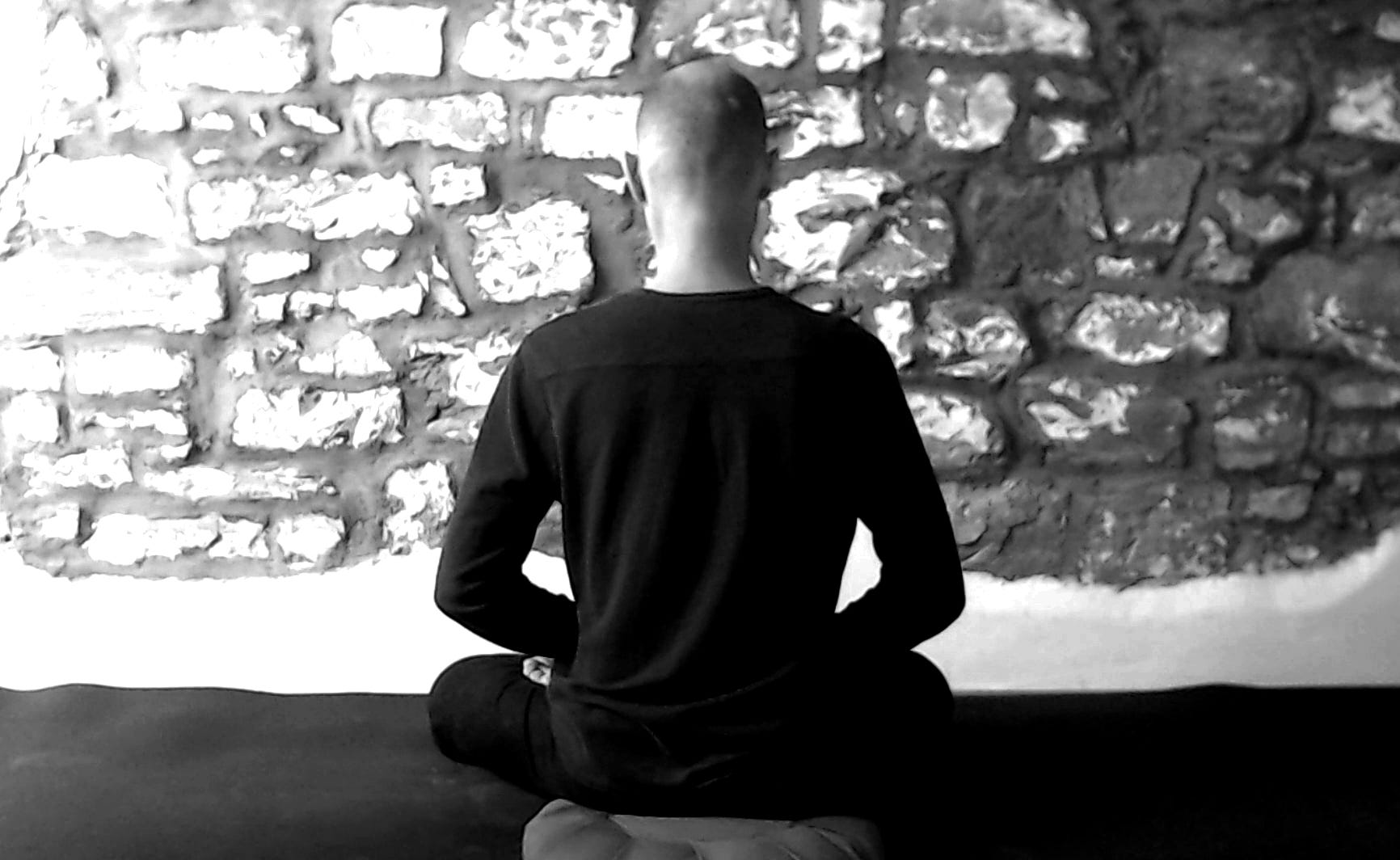
A Bit More at Home
An Essay on Zazen
“When I have occasionally set myself to consider the different distractions of men, the pains and perils to which they expose themselves at court or in war, whence arise so many quarrels, passions, bold and often bad ventures, etc., I have discovered that all the unhappiness of men arises from one single fact, that they cannot stay quietly in their own chamber.”
— Blaise Pascal, Pensées #139
I Am Home
I often hear from participants of the Cloud Sangha and from other people practicing zazen in the shikantaza style, the same phrase: when I sit zazen, it’s as if I’m returning home. I myself can fully join these words, because I too feel at home in the practice of zazen.
But what is this experience of home? How exactly do I feel this, I ask myself?
Although this experience cannot be contained in words, I can point to at least two important qualities that unite in the feeling of home in my experience: it is a feeling of safety and a feeling of freedom. Simultaneously!
I think, in general, this is understandable to anyone who knows from their own experience what it means to be at home and what it means to be outside it. Home protects us from bad weather, from outside interference, and indeed from a stranger’s gaze. At home there are no outsiders at all — everyone here is local, everyone is ours, and everything is ours. At home I know every corner and care for all corners. Home is a place of intimacy, comfort, and coziness. At home I can also behave much more freely than in so-called public places, and—most importantly—feel much more free. At home I feel much more the master of my life than outside the home. Therefore, the loss of home or its destruction is experienced by us extremely hard.
Who Is Master of the House?
However, homes are different. Once, long ago, in a book by the respected Buddhist teacher Bhante Henepola Gunaratana, I read the phrase: “Meditation is simple: you sit down, close your eyes... and welcome to the madhouse!” And I think many people who have entered the path of meditation can agree with these words. At the beginning of practice, and often at its subsequent stages, we often encounter internal chaos, which is not only difficult to cope with, but even to touch can be frightening or even unbearable. That space which we call “ourselves” or “ours,” turns out upon inspection to be not ours and not providing either safety, or intimacy, or comfort, or freedom.
Order in the House
And nevertheless, many people practicing meditation, sooner or later on their path say: “Through this practice I return home.” Yes, in meditative practice — not only in zazen in the style of the Soto school, but also in other types — we gradually learn to deal with internal discord and harmonize it. That is, in meditative practice we learn to tidy up the house, put things in their places, and create coziness in the house. Each meditative style may have its own peculiarities, its own approaches, principles, and tools for harmonizing relationships with our internal house spirits.
The style of my practice also includes several important principles that I apply both for formal zazen practice and in general in life on my Zen Way. By maintaining the balance of these principles, I return home. Here are these principles:
1. Structure
2. Motivation
3. Presence
4. Flow
Structure
Structure is the walls of the house that we build with the help of our practice. In turn, in the structure of practice we can distinguish:
1. Structure of time
2. Structure of space
3. Structure of posture
Time
For the convenience of concentrating on the current flow of time, bringing us continuous changes both of external events and internal reactions, the structuring of time plays an important role. It’s good if we clearly define the boundaries of formal practice—when it begins and when it ends.
These same principles of structuring time are also suitable for implementing the practice of presence in everyday affairs. The Slavic tradition of ‘sitting before the road’ — sitting quietly for a moment before a journey — can serve as an example of an opening ritual, and adding ‘sitting after the road’ would make this even more complete. That is why we in the Cloud Sangha sit in the morning, opening the door from night to day, and in the evening — from day to night.
Having determined the time for our affairs, we can fully devote ourselves to their fulfillment, as some Zen teachers say: “Give yourself to the matter wholeheartedly”. If I know exactly when the matter begins and when it ends, I feel more stable, and it’s easier for me to cope with surprises that occur within this structure.
We also try to give ourselves to zazen practice with all our heart, with all ourselves, with all our being—from beginning to end, from gong to gong.
Space
Each of our actions takes place in some specific space, and it’s good if we pay attention to this space.
Attention itself already changes our relationship with space: even for a moment we stop living in past impressions and fantasies about the future, and meet with reality unfolding before us in the form of directly experienced phenomena. Therefore, in formal practice we try to return attention precisely to that space where we are present at the given moment.
A certain structuring of space, in which we remove from it everything superfluous, preserving only what is necessary for the current matter (for example, for formal practice of mindfulness), helps us to be more collected and included in the present experience.
In the tradition of the Soto school in zazen we usually sit with open eyes, looking at the wall. However, in the Cloud Sangha, due to the fact that we sit together online, most of us sit in front of a phone or computer, seeing other participants, and here the structure of organizing online space also plays its role. We sit together, and in this sitting there is a certain order, which also helps us to be with the flow of changeable experiences within this order.
The practice of zazen is essentially spatial. In a certain sense in this practice we ourselves become space, in which any divisions and oppositions disappear, including the basic division of reality for us into subject and object, and of space into inner and outer. But this topic, perhaps, deserves detailed consideration, so I will write about this in a separate essay.
Posture
Posture in the style of meditation that we call “just sitting” plays a key role, which is reflected in the name itself — we sit precisely with the body. However, the form of our body (posture) largely determines the form of our consciousness. Therefore, we sit in a certain way. In this sitting there is its own structure, within which we can release attention and observe the flow of current experiences.
In fact, in this style of meditation what is important for us is the balance between a sufficient level of calmness and the same level of alertness (engagement).
In the structure of posture, two factors are important for us:
1. Horizontal support on the ground
2. Vertical support on the spine
Horizontal Support
Horizontal support on the ground allows us to release the weight of the body and feel more trust, calmness, and confidence. After all, a person who is insecure, excited, anxious, sits on pins and needles, fidgets and twitches, while a “frozen” person, absent, not engaged in reality, “doesn’t feel the ground beneath them.” Accordingly, by accustoming ourselves to awareness and feeling of support, giving it the weight of the body, we can gradually cultivate a sense of contact with reality, trust in life and in ourselves, confidence and calmness.
In order to feel the support on the ground well, we need to find a comfortable posture in which we could really relax and release the weight onto the support surface, and—most importantly—literally, physically take root in the experienced reality.
Vertical Support
If horizontal support gives us the opportunity to release weight, relax sufficiently and feel some level of calmness, then a vertically stretched spine helps create a feeling of greater engagement, alertness, wakefulness. In fact, the task of all our practice is constant catching and maintaining balance between a sufficient level of calmness and a sufficient level of wakefulness.
If there is too much calmness, it turns into dullness, drowsiness, and apathy. If the balance shifts toward alertness, then it can grow into excessive excitement, anxiety, and loss of calm attentiveness.
When we build up the back, it’s important for us, if possible, to slightly straighten the curves in the lower back and neck, so that the S-shaped form of the spine slightly stretches and straightens. For this it is necessary to adjust the height of the pelvis and find such an inclination of the head, slightly sinking the chin into the throat, to create the feeling as if the entire spine stretches from the tailbone through the crown of the head into the sky.
Dogen, having returned to Japan from China, where he studied the practice of Zen, when asked what he learned in China, answered: “I learned that the eyes are horizontal, the nose is vertical”.
In my opinion, this phrase explains a lot about the practice of zazen.
Another famous Zen teacher, Shunryu Suzuki, describes our relationship with the body in Zen practice this way:
“These forms are not the means of obtaining the right state of mind. To take this posture is itself to have the right state of mind. There is no need to obtain some special state of mind.
Now I would like to talk about our zazen posture. When you sit in the full lotus position, your left foot is on your right thigh, and your right foot is on your left thigh. When we cross our legs like this, even though we have a right leg and a left leg, they have become one. The position expresses the oneness of duality: not two, and not one. This is the most important teaching: not two, and not one. Our body and mind are not two and not one. If you think your body and mind are two, that is wrong; if you think that they are one, that is also wrong. Our body and mind are both two and one. We usually think that if something is not one, it is more than one; if it is not singular, it is plural. But in actual experience, our life is not only plural, but also singular. Each one of us is both dependent and independent.”
Motivation
Why do I practice zazen? Why do I walk the Zen way? To be able to live in harmony with reality, to feel at home in this world.
In one of his essays, Alan Watts wrote about awakened people:
“They are just like us, and yet much more at home in the world, floating much more easily upon the ocean of transience and insecurity.”
I do not consider myself once and forever awakened, but my forty-year search for awakening has led me to understand it not as a transforming event, but as a Path transforming my life. At a certain stage of my path I let go of the aspiration to become a Buddha, but now I try to embody awakening through the style of my life. Proceeding from such a vision, the words of Dogen from his essay “Fukanzazengi” have now become clear to me:
“For zazen, a quiet room is appropriate. Drink and eat in moderation. Let go of all involvements and let myriad things rest. Do not think good or bad. Do not judge right or wrong. Stop conscious endeavor and analytic introspection. Do not try to become a buddha.”
Not to try to become a Buddha, but for a time to stop dividing life into good and bad, into this and that, into right and wrong, into inner and outer — this I can do, sitting in zazen.
Thus, my motivation now is directed not toward becoming a Buddha and feeling at home in this world sometime in the future, when on my winding path I finally reach this home, but toward reproducing the qualities of awakened consciousness right now and thus right now feeling a bit more at home in this world of transience and insecurity.
But what exactly are the qualities of awakened consciousness that I consider most important?
Presence
Here we come to the next principle of my zazen practice. Presence, in my opinion, is the most important thing in Zen practice, because it is presence that opens the door home. No matter how much I wander in thoughts and feelings, in judgments about good and bad, in dividing the world into this and that, into before and after, into inner and outer... I can always return here —to this place where I am now, to this life situation of mine, to this time-space. And whatever happens to me — even the greatest grief, strong anxiety or deep despair — presence has a chance to open the door home. Not guaranteed, of course, because the strength of presence may not always be sufficient to transcend the experience that has seized me and thrown me far from home. But that is why we are given practice as repetition. Time after time, breath after breath, moment after moment I can return to presence. “If you want to attain just this, immediately practice just this” — this is what Dogen said about this in the same “Fukanzazengi.”
And in this “immediately” I discover not a static state, but movement.
Flow
And here I return to Suzuki’s words about posture: “Each one of us is both dependent and independent”. This phrase, said about body and mind, actually describes my entire life.
I am dependent on reality. On a thousand of its circumstances. On its endless invitations and refusals. On my reactions to these invitations and refusals, which arise from billions of years of evolution that I carry within me, and from habits developed over years of life.
But at the same time, if I return to presence, I discover that in this reality there is nothing to grasp, in this reality nothing can be appropriated, in this reality nothing stands still. This reality flows. Like a river. And actually, there is no reality separate from me to which I would react in one way or another. There is no reality that would invite me somewhere and refuse me something. There is no me separate from reality. Reality and I are two and one, reality and I are not two and not one.
Heraclitus said: “You cannot step into the same river twice”, but I cannot step into it even once, remaining something static, something permanent, because I myself am the river. And if I want to be one with reality, if I want to feel at home here, I need to flow together with it. Not cling. Not appropriate. Not try to stop.
Or more precisely — to become the river. To become and become. Through presence. Through discovering the flow of reality. Again and again.
Nothing Is Worth Clinging To
The Buddha taught not to cling and not to appropriate anything in this reality. In the sutta “The Shorter Discourse on the Destruction of Craving” he teaches the practice not to just anyone, but to the very ruler of gods, Sakka:
“Then Sakka, ruler of gods, went to the Blessed One, and after paying homage to him, he stood at one side and asked: ‘Venerable sir, how in brief is a bhikkhu liberated in the destruction of craving, one who has reached the ultimate end, the ultimate security from bondage, the ultimate holy life, the ultimate goal, one who is foremost among gods and humans?’
‘Here, ruler of gods, a bhikkhu has heard that nothing is worth adhering to. When a bhikkhu has heard that nothing is worth adhering to, he directly knows everything; having directly known everything, he fully understands everything; having fully understood everything, whatever feeling he feels, whether pleasant or painful or neither-painful-nor-pleasant, he abides contemplating impermanence in those feelings, contemplating fading away, contemplating cessation, contemplating relinquishment. Contemplating thus, he does not cling to anything in the world. When he does not cling, he is not agitated. When he is not agitated, he personally attains Nibbāna’”.
This instruction to a deity is also suitable for me, a mortal, because if even for powerful gods in this reality it is better not to cling to anything and not to try to appropriate anything, then all the more so for me.
A Bit More at Home
Pascal was right: all the unhappiness of men arises from one single fact, that they cannot stay quietly in their own chamber. That is, they do not know how to truly be at home.
But what does it mean to “stay quietly in one’s own chamber”?
It does not mean to run away from the world. It does not mean to close oneself within four walls. To stay quietly means to be at home. And to be at home means to be here. Wherever this “here” may be.
Why can’t we? Because we cannot let go. Cannot flow.
Home is not a place. Home is a way of being. When I sit in zazen, I return home. Not to some special state. Not to enlightenment. Not to peace or bliss. I return here. To this room. To this body. To this breath. To this moment.
The structure of practice erects the walls of the house. Motivation opens the door. Presence allows me to settle in the space. Flow moves me in this space.
In this flow I do not try to become a Buddha, I just sit. I let go of all conscious endeavor, so that the river of life takes me and carries me forward, breath by breath. And if I can become the river itself, then I have nothing to cling to and nothing to appropriate, I have nothing to divide into good and bad, into right and wrong.
And then, even for a moment, I can feel a bit more at home in this world of transience and insecurity.
As Alan Watts said about awakened people: “They are just like us, and yet much more at home in the world, floating much more easily upon the ocean of transience and insecurity”... not because they are special, not because they have achieved something, but because they have learned to be the river and home for themselves. Simultaneously — the river and home—this is what I would add to his words.
The same text in Russian:
Чуть более по-домашнему
Collection of all essays:
Just Sitting?
You can join the Cloud Sangha’s shared practice here:
Cloud Garden of the Year
Since February 24, 2022, from the beginning of Russia’s war against Ukraine, I have taken a vow to work for voluntary donations (similar to a Buddhist monk). Since then, at least all of my online activity, which takes up 95% of my working time, has been happening in exactly this format. I intend to maintain this practice until the end of the war, and then we’ll see. If you value the “Buddha in the City” project and want it to live and continue its work, you can support it here in whatever way is convenient for you:
Support Buddha in the City
All the best to you, and see you on the cloud,
Valery Veryaskin